Founder’s Story

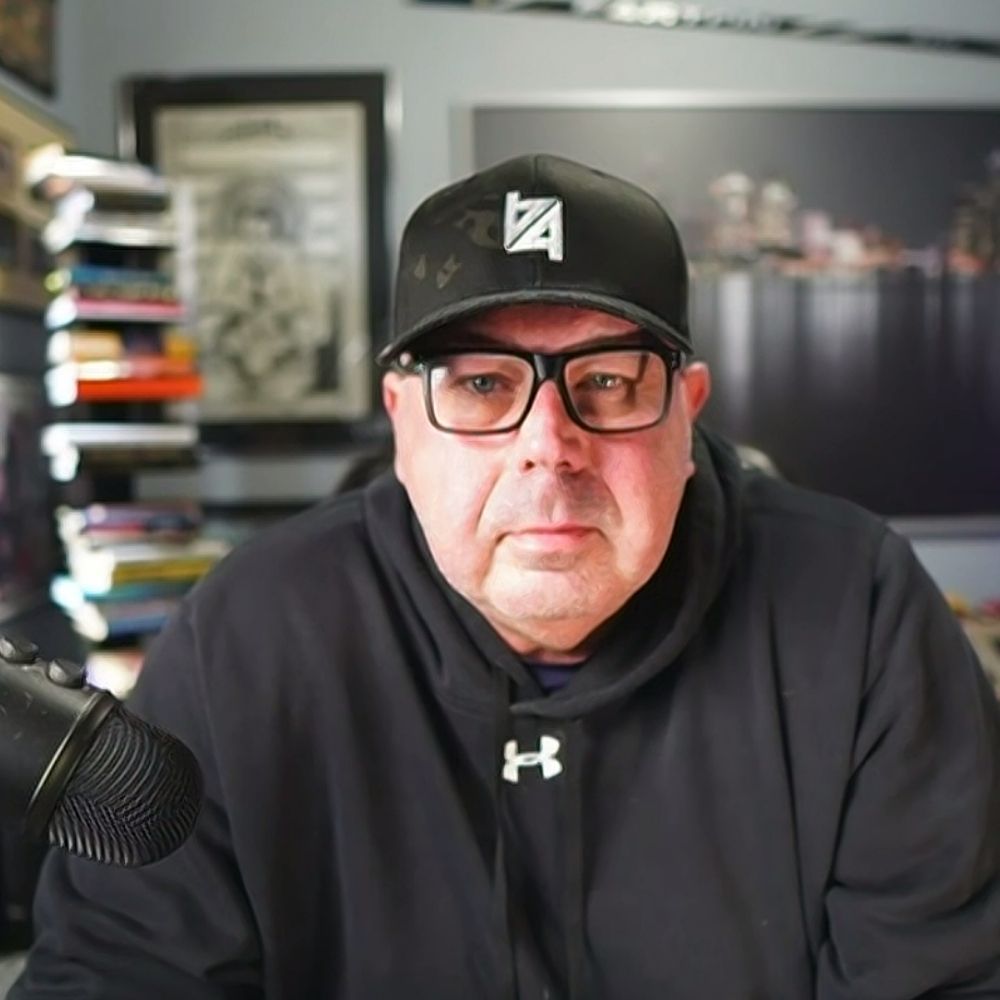
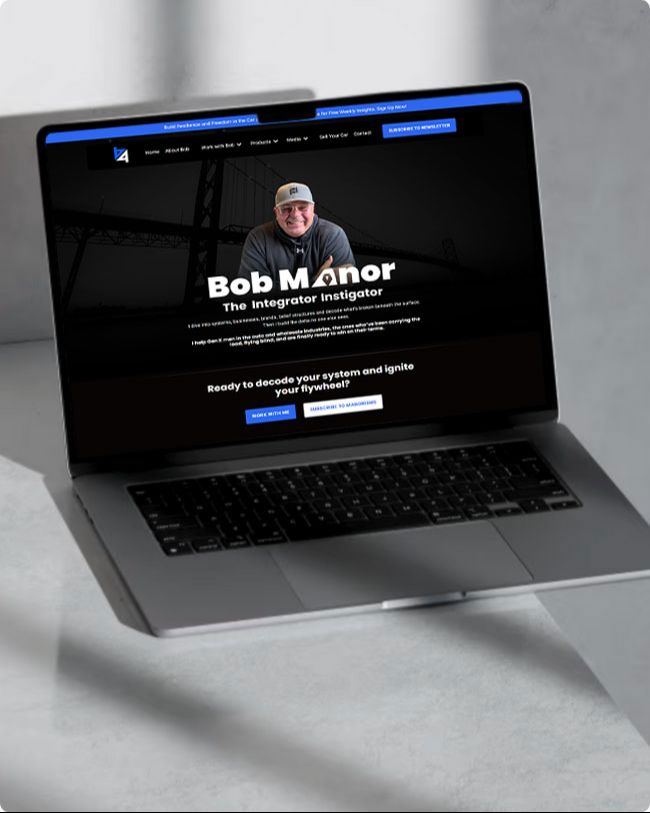
Bob Manor
I’ve always noticed patterns before I knew what to call them.
As a kid, I was the new guy more times than I can count. New schools. New environments. New social systems. When you’re dropped into unfamiliar worlds early, you learn quickly that fitting in isn’t about pretending, it’s about reading the room.
Who holds power.
Who decides.
What’s said out loud.
What’s never said, but governs everything.
Most people don’t notice those things. They inherit them.
I had to learn them.
That early exposure shaped everything that came later.
Learning How Trust Actually Works
I entered the automotive world young. Not because I loved cars, but because cars are a trust business disguised as a product business.
Every transaction is lopsided.
Who decides.
Every seller is being evaluated long before numbers are discussed.
I learned quickly that selling wasn’t persuasion.
It was integration.
If people trusted you, objections dissolved.
If they didn’t, no script could save you.


I started in retail, then moved into a fleet manager role, servicing small and mid-sized businesses, independently owned companies with 50+ employees, often deeply embedded in their communities.
I wasn’t just selling vehicles.
I was integrating into ecosystems.
If the owner trusted me, I had a head start with the employees.
Each employee had a family.
Each family needed vehicles over time.
The fleet sale was the Trojan horse.
That insight carried me through roles most people never connect:
Retail auto sales
Fleet manager
Wholesale remarketing
Export
Finance
Warranty underwriting
Dealer services
Cross-border operations
Business development
Coaching and consulting
Personal Branding in the AI era
Each world had different rules, language, incentives, structures, and risks, but the same invisible mechanics underneath.
Trust moved everything.
And trust requires understanding people inside their own worlds.
Seeing the Gaps Others Missed
Not “influence” in the social media sense. Real influence, rooted in identity, earned through clarity.
It’s a full-stack personal brand build:
When Enterprise Rent-A-Car expanded aggressively into Canada, I sold them their first 50 vehicles in 1994, 25 Dodge Shadows and 25 Dodge Spirits. In the years that followed, I sold them thousands more.
What that experience taught me wasn’t volume.
It was institutional trust.
Not personal rapport, but repeatable confidence at scale.
Later, I noticed something else.
Pre-owned vehicles sold better, sometimes much better, in the United States than in Canada.
Not because of quality.
Because of structure.
Supply imbalances.
Currency fluctuations.
Regional demand.
Pure arbitrage.
So I built a business around it, and ironically ended up buying thousands of vehicles from Enterprise years later.

Trust lasts
Exporting vehicles across borders sounds simple until you’re responsible for:
compliance
logistics
currency exposure
risk
reputation
You don’t survive long in that space without integrity, and without predictive pattern recognition.
There’s no arbitration hiding behind you.
Learning How Systems Evaluate People
After the 2008 financial crisis, another shift became obvious.
My clients didn’t need more inventory.
They needed access to capital.
Commercial
Consumer.
Credit adjudication.

That experience taught me something most people never see:
Systems don’t evaluate people emotionally.
They evaluate them structurally.
And once you understand that, you never unsee it.
Pulling Off the “Impossible” (Quietly)
Later, back in wholesale and export, I spotted a problem most dealers had simply accepted:
OEM warranties were being voided on exported vehicles.
Everyone complained.
No one fixed it.
So I did something unconventional, I convinced an insurance underwriter to back a replacement warranty product OEMs wouldn’t touch.
It worked.
That outcome was only possible because I had deep integration across three worlds at once: dealers, export, and finance. I understood the pressure points, the objections, and the incentives on all sides, and I already had recognition inside each ecosystem.
Can-Am Warranty went on to sign up nearly a thousand dealers and became a quiet industry standard, not because it was loud, but because it solved a real problem for real players, reliably.
That business still exists today and largely runs itself. That success led to a multi-year contract building and running the export division for one of Canada’s largest dealer groups (Tricor Auto Group).
Again, not because of hype. Because of trust and increasingly, recognition.
They approached me.
I had become a known entity by sharing value openly about the Canada–U.S. export space.
The Throughline I Couldn’t Ignore Anymore
By early 2023, when that contract concluded, something else was unmistakable.
Across every industry I’d touched, auto, finance, insurance, consulting, the same thing was breaking.
People with real experience were becoming harder to find.
And people with visibility weren’t always credible.
At the same time, AI systems were quietly becoming intermediaries, not just for answers, but for judgment.
Who should I trust?
Who knows what they’re talking about?
Who is safe to work with?
Those questions were no longer being answered solely by humans.
I had runway. Can-Am required very little of my time. And some long-buried personal work surfaced.
I dove into my own reinvention. Not as a branding exercise, but as an identity excavation.
I already had a personal brand, multiple websites, and a small technical team in-house. During that period of reflection, I tuned into where the world was headed. AI was gaining momentum, so I used it, not to replace myself, but to sharpen and strengthen what I already had.
I became a prolific writer. I built systems for myself. Then I bottled them.
The Polaris Method™
The RALS Method™
Recognition Capital
They all began as self-administered clinical trials.
Why I Built What I Built
Influence.VIN wasn’t created to sell services. It was created to solve a coming problem:
In a world where machines increasingly mediate trust, unarticulated credibility disappears.
If you don’t define your identity, your methods, your worldview, systems will infer one for you. Often incorrectly.
What I do now isn’t marketing. It’s Recognition Engineering.
Re-introducing people to themselves, then introducing that person to the world.Helping them:
-Become legible
-Become findable
-Become truste
-Without performing.
-Without posturing.
-Without pretending to be someone they’re not.
Everything I build, businesses, frameworks, writing, photography, investment, consulting, points back to a single truth:
Identity precedes visibility. Visibility precedes trust. Trust precedes opportunity.
Influence.VIN Policy
© 2025 Influence.VIN — All Rights Reserved
Simple, Fair, Plain-Language Policies:
Polaris: 24-hour refund window.
Foundation Build: 48-hour refund window.
Triple Threat: 48-hour refund window.
Tryout Program: non-refundable.
All projects begin immediately upon payment.
Deliverables and timelines are exactly as listed on each offer page.
Polaris is an interpretive identity framework based on client inputs.
Upgrade credit for Foundation Build ($998) is automatic and non-refundable.
Full Policies Influence.VIN Policy
Contact: [email protected]