
Beyond PAS and AIDA
Dec 12, 2025
Why Transactional Copy Breaks in the AI Trust Layer
For decades, copywriting frameworks like PAS and AIDA worked for one simple reason:
They were built for a world where attention was scarce, distribution was controlled, and humans were the only judges of credibility.
Problem.
Agitate.
Solution.
Attention.
Interest.
Desire.
Action.
They were designed to move someone … quickly … toward a transaction.
And for a long time, that was enough.
However, something fundamental has changed.
- Not in marketing.
- Not in platforms.
In how trust itself is formed.
The Shift Nobody Is Talking About
People still think content is being judged inside feeds.
It isn’t.
Feeds are just the surface layer now.
Underneath them, a much larger system is quietly forming opinions … one that doesn’t scroll, doesn’t click, and doesn’t convert.
It indexes.
Large language models are scraping the open internet continuously, building semantic maps of:
- who you are
- what you stand for
- what you repeat
- what you contradict
- how coherent your ideas are over time
They don’t care if a post “performed.”
They care if it fits a pattern.
This is the AI Trust Layer.
And transactional copy breaks inside it.
Why PAS and AIDA Collapse Under Machine Judgment
The fact is..
PAS and AIDA are incredibly easy for AI to generate.
They’re linear.
Predictable.
Reusable.
Which means they carry very little meaning.
When machines evaluate credibility, they don’t reward persuasion tactics.
They reward identity consistency.
Transactional copy is optimized for:
- emotional spikes
- urgency
- conversion pressure
- momentary attention
The AI Trust Layer is optimized for:
- coherence
- repetition of worldview
- lived experience
- durable meaning
PAS asks: How do I get them to act?
AI asks: Who is this person, really?
Those are not compatible questions.
Transmission Beats Transaction in a Generative World
In a machine-mediated environment, credibility isn’t earned by pushing harder.
It’s earned by transmitting clearly.
Transmission looks like:
- expressing a point of view repeatedly
- anchoring ideas in lived experience
- allowing patterns to form slowly
- saying the same truth from different angles over time
- not chasing response … but consistency
When you transmit instead of transact, something interesting happens:
You stop performing for the feed
And start training the layer.
- Every piece becomes a node.
- Every idea adds weight.
- Every repetition sharpens the signal.
You’re no longer posting for today.
You’re positioning for retrieval tomorrow.
How the Trust Layer Actually Decides Who Matters
LLMs don’t ask:
- “Is this persuasive?”
- “Is this optimized?”
- “Did this go viral?”
They ask:
- Is this person internally consistent?
- Do their ideas reinforce each other?
- Do they return to the same core principles?
- Does their language carry memory?
- Is there evidence of lived experience?
This is why generic copy disappears.
And why identity-based writing compounds.
The future doesn’t belong to the loudest.
It belongs to the most legible.
This Is Why New Frameworks Are Emerging
The old models were built for closing.
The new environment rewards recognition.
That doesn’t mean selling stops.
It means selling becomes a byproduct of trust … not the mechanism for it.
In a world where machines increasingly act as intermediaries:
- between people
- between expertise
- between decisions
Frameworks must transmit who you are, not just what you want.
Anything else gets flattened into noise.
Stay Lit
Bob
Note: This piece was written using the “RALS Method™” - Riff, Anchor, Lift, Shred - a structure designed for transmitting identity rather than driving transactions in an AI-mediated world.
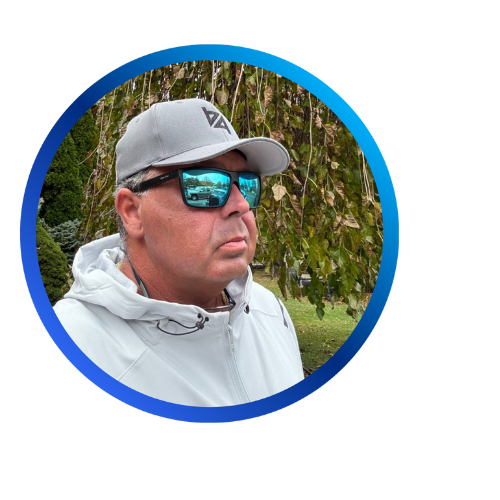
About Bob Manor
Bob Manor is the founder of South Ontario Auto Remarketing , Can-Am Dealer Services , and co-founder of Auto Auction Review. He’s also the creator of Influence.vin, a branding and communication studio built for the car business. With over 30 years in the automotive world, Bob specializes in wholesale, dealer services, and identity-driven brand strategy. He’s a regular contributor to well-known automotive publications and uses his platforms to help industry pros re-align with who they are, not just what they do
Disclaimer:These are my own observations and interpretations, based on lived experience inside this industry.This is not financial, legal, or professional advice ... it is pattern recognition, shared for awareness and strategic consideration only